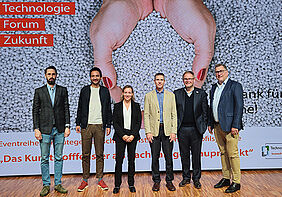




PVC windows with a high recycled content and long service life in focus at the 5th TechnologieForumZukunft of Gütegemeinschaft Kunststoff-Fensterprofilsysteme e.V.
Since February 2021, the RAL Gütegemeinschaft Kunststoff-Fensterprofilsysteme e.V. (GKFP) has been organizing the interactive event series "TechnologieForumZukunft". The fifth edition focused on "PVC windows with a high proportion of recycled material and a long service life" and took place on November 7, 2024.
Five speakers highlight environmental, resource and circular economy aspects
The first part of the two-hour event consisted of five presentations by speakers representing different perspectives from industry and professional associations.
Bernhard Elias, Quality Assurance Officer at GKFP, opened the event with a presentation entitled "Five Demonstrable Environmental and Resource-Related Characteristics of PVC Windows Throughout Their Life Cycle." Topics included the VinylPlus® Product Label, resource efficiency, RAL quality assurance, eco-design considerations in product development, and circular economy concepts.
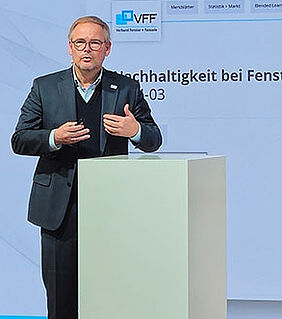
In the second presentation, Frank Lange, Managing Director of Verband Fenster + Fassade (VFF) and Gütegemeinschaft Fenster, Fassaden und Haustüren e.V., presented the VFF Sustainability Guideline and provided an overview of its key contents. He explained legal requirements as well as environmental and sustainability criteria and introduced building certification systems and recognized forms of verification used in Germany.
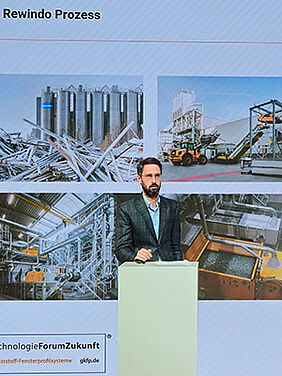
Following a short video summarizing a Rewindo project for the recycling of end-of-life windows, Moritz Underberg explored the use of recycled materials in greater detail. As Sustainability Manager at Salamander Industrie-Produkte GmbH, he presented the recently published Rewindo figures for the previous financial year. According to Rewindo, the recycling of 136,000 tonnes of PVC post-consumer and post-industrial materials resulted in a calculated avoidance of approximately 232,000 tonnes of CO₂ emissions. He also introduced the municipal funding programme "Climate-Friendly Living and Working in Düsseldorf", for which the quality association supports the administration through a verification procedure. This helps window manufacturers and purchasers identify profile systems that qualify for funding. Underberg concluded by presenting his company's environmental, resource-efficiency and circular-economy objectives.
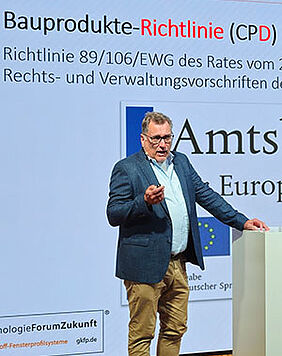
Stephan Schmidt, Managing Director of the Fachverband Schloss- und Beschlagindustrie (FVSB), focused on the Construction Products Regulation (CPR). He reviewed the history of the CPR and its recently adopted revision, as well as the implications for the standards sector. Many technical requirements will still need to be specified through harmonized product standards. Schmidt highlighted the increasing importance of environmental and resource-related considerations within the regulatory framework and concluded that "RAL quality marks will need to place greater emphasis on environmental and resource-related aspects in the future."
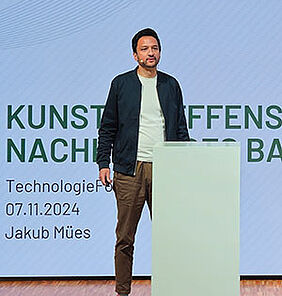
Jakub Mües (EPEA GmbH) examined PVC windows from the perspective of a consulting company. He outlined current challenges facing the construction and real estate sector regarding resource consumption, emissions and circularity. He also explained how frameworks such as the Energy Performance of Buildings Directive (EPBD), the Ecodesign for Sustainable Products Regulation (ESPR), the Construction Products Regulation (CPR) and taxonomy-related requirements are supporting the transition towards more circular approaches.
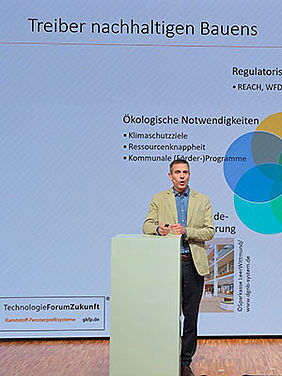
Mües also discussed voluntary building certification systems such as DGNB, LEED, BREEAM and QNG. Furthermore, he explained that the certification of windows containing PVC recyclate may be possible under the applicable requirements of certain certification systems. He concluded by demonstrating how transparent documentation of product characteristics, for example through Environmental Product Declarations (EPDs), building resource passports or the Digital Product Passport, can improve transparency and traceability.
Constructive exchange between our guests
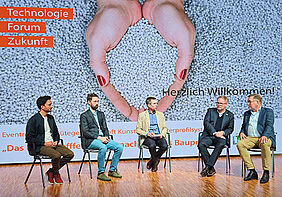
To further explore the different perspectives presented during the event, the speakers participated in a panel discussion moderated by Bernhard Elias. Participants in the audience also had the opportunity to contribute through questions and comments.
The discussion was introduced by a short statement from Baugesellschaft Nettetal, which had been invited to share its experience and perspective regarding the use and performance characteristics of PVC windows.
One of the key conclusions of the event was that the assessment of PVC windows may take into account a range of factors, including serviceability, service life, the use of recycled materials and circularity aspects. The panel also emphasized that regulatory developments, including design-for-recycling and design-for-repair approaches, are expected to play an important role in the future development of the industry.
Click here for the live recording with English subtitles on our YouTube channel.